
Pekingese vs. Shih Tzu: Key Differences for Dog Lovers
Pekingese vs. Shih Tzu: Unveiling the Distinct Charms of Two Beloved Breeds
The world of small, companion dogs is rich with personality and charm, and two breeds that often capture hearts are the Pekingese and the Shih Tzu. While both are undeniably adorable, possessing luxurious coats and a regal bearing, they also harbor distinct differences that are crucial for potential owners to understand. This comprehensive guide delves into the nuances that set these two breeds apart, from their historical origins and physical characteristics to their temperaments and care needs. Understanding these Differences between Pekingese and Shih Tzu will empower you to make an informed decision about which of these delightful companions is the perfect fit for your lifestyle.
𝙲𝚘𝚗𝚝𝚎𝚗𝚝
- A Royal Lineage: Understanding Their Origins
- Physical Discrepancies: A Closer Look at Their Features
- Temperament and Personality: Companionship Styles
- Health Considerations: Common Ailments
- Training and Socialization: Nurturing Well-Adjusted Companions
- Grooming Needs: Maintaining Their Majestic Coats
- Which Breed is Right for You? Comparing Lifestyle Compatibility
- In summary: Two Distinctly Wonderful Companions
A Royal Lineage: Understanding Their Origins
Both the Pekingese and the Shih Tzu boast a long and storied history, deeply intertwined with royalty and ancient Asian cultures. This shared heritage contributes to their dignified demeanor, but also hints at their distinct evolutionary paths.
The Pekingese: Guardian of the Imperial Palaces
Originating in China, the Pekingese is one of the oldest breeds known, with its history tracing back over 2,000 years. Revered as sacred dogs within the imperial palaces of Peking (now Beijing), they were considered symbols of royalty and were rarely seen outside the Forbidden City. Their development was meticulously controlled by eunuchs, and they were often used as companions for the emperor and empress, and even as alarm systems, barking to alert guards to intruders. This exclusive upbringing instilled in them a sense of self-importance and a protective instinct towards their chosen family. They were so highly prized that stealing a Pekingese was punishable by death.
The Shih Tzu: The "Lion Dog" from Tibet
The Shih Tzu, also originating in Tibet and later developed in China, has a history that dates back even further, though their exact lineage is somewhat debated. It is believed that they were bred by Tibetan lamas as sacred lap dogs and were often gifted to Chinese royalty. The name "Shih Tzu" translates to "lion dog," a moniker given due to their flowing mane-like hair and their perceived resemblance to the mythical lion dogs of Buddhism. They were also favored by Chinese royalty, particularly during the Ming and Qing dynasties, and were bred for companionship and as luxurious accessories. Their development involved crossing with other small breeds, potentially including the Pekingese, which might explain some of their shared traits.
Bobtail vs. Bearded Collie: Key Differences for Dog LoversPhysical Discrepancies: A Closer Look at Their Features
While both breeds share a generally small stature and abundant coats, a closer examination reveals several key physical Differences between Pekingese and Shih Tzu.
Size and Build
- Pekingese: Generally smaller and more compact. They typically weigh between 7 to 14 pounds (3 to 6.5 kg) and stand about 6 to 9 inches (15 to 23 cm) at the shoulder. They have a sturdy, muscular build despite their size, with a broad chest and a distinct "hunch" or sway back appearance, often described as a "lion-like" stance. Their head is broad and flat with a short muzzle.
- Shih Tzu: Tend to be slightly larger and more robust. They usually weigh between 9 to 16 pounds (4 to 7.3 kg) and stand about 9 to 10.5 inches (23 to 27 cm) at the shoulder. They have a more rectangular body shape and a slightly longer muzzle compared to the Pekingese. Their gait is often described as a confident, rolling stride.
Facial Features and Skull Structure
- Pekingese: Characterized by a very short, flat face (brachycephalic), a pronounced underbite, and large, round, dark, expressive eyes that are set wide apart. Their nose is typically short and broad, and they have a distinct "widdle" when they walk due to their short legs and body. They possess a prominent stop (the indentation between the eyes and the muzzle).
- Shih Tzu: Also brachycephalic, but generally with a slightly longer muzzle than the Pekingese. Their eyes are large, round, and set apart, but often appear less "buggy" than those of the Pekingese. Their nose is short but usually not as flattened as the Pekingese, and they have a less pronounced stop. Their expression is often described as friendly and alert.
Coat Characteristics
Both breeds are renowned for their beautiful, long, flowing double coats, but there are subtle Differences between Pekingese and Shih Tzu in their texture and grooming requirements.
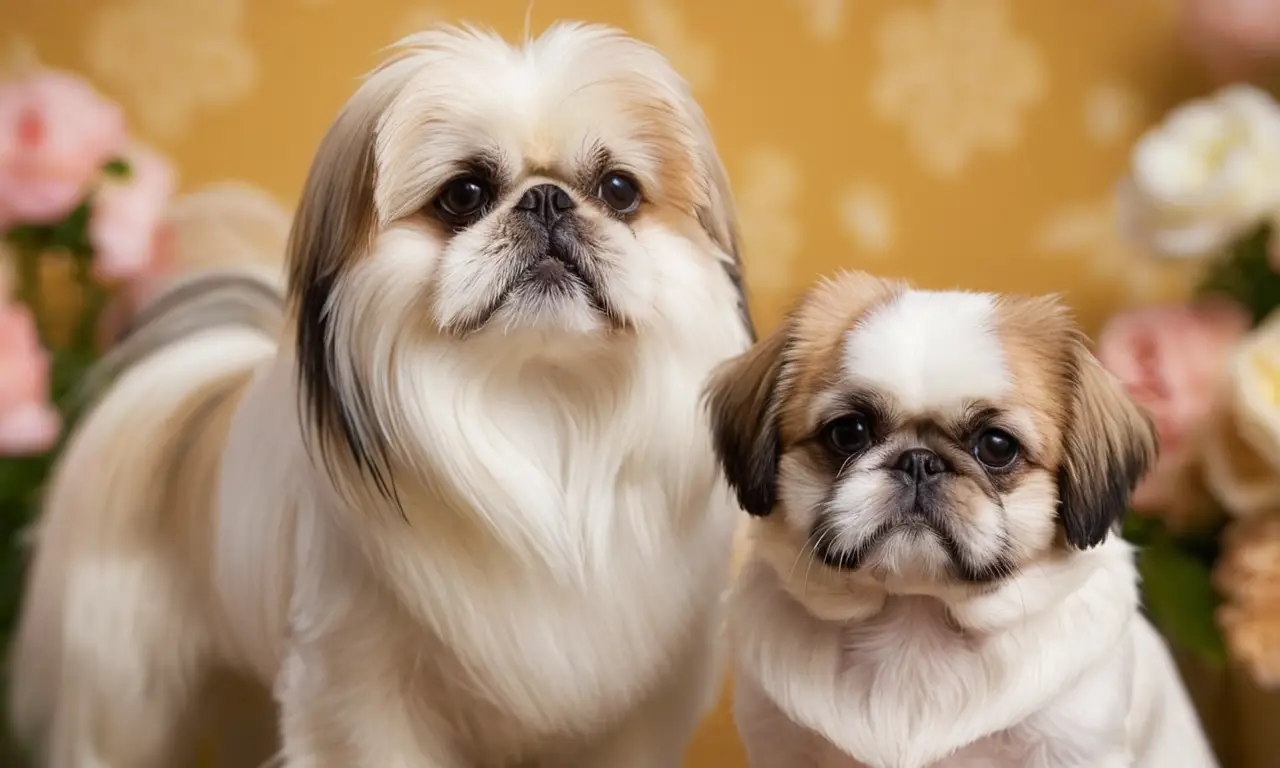
- Pekingese: Their coat is long, straight, and dense, with a soft, feathery texture. It consists of a profuse outer coat and a soft undercoat. They have a characteristic mane that frames their face, giving them a majestic appearance. The coat requires significant daily grooming to prevent matting and tangles.
- Shih Tzu: Their coat is also long and flowing but tends to be denser and silkier, with a slight wave. It can also be straighter or more curly depending on the individual dog. Like the Pekingese, they have a full mane, but it may not be as dramatically pronounced. Regular grooming is essential, and many owners opt for a shorter "puppy cut" for easier maintenance.
Tail Carriage
- Pekingese: Their tail is carried high and curved over their back, often appearing plume-like and feathered.
- Shih Tzu: Their tail is also carried high over their back, usually with a distinct curl, and is well-feathered.
Temperament and Personality: Companionship Styles
While both breeds are bred for companionship and are generally affectionate with their families, their temperaments exhibit notable Differences between Pekingese and Shih Tzu.
The Pekingese Temperament: Dignified and Independent
Pekingese are known for their dignified, somewhat aloof, and independent nature. They possess a regal air and can be quite proud. They are fiercely loyal and devoted to their owners, often forming a strong bond with one person in particular.
Dog Digestive Issues: Causes, Symptoms, & Effective Treatments- Loyalty and Affection: Extremely loyal and loving towards their family, but can be reserved with strangers.
- Independence: They are not typically clingy dogs and can entertain themselves.
- Protective Instincts: Despite their size, they can be surprisingly brave and protective of their home and family, often alerting their owners to any perceived threat with their vocalizations.
- Stubbornness: They can be strong-willed and independent, which can make training a bit challenging for novice owners. They respond best to positive reinforcement and consistent, firm, yet gentle handling.
- Slightly Aristocratic: They seem to know they are special and can be a bit demanding of attention.
The Shih Tzu Temperament: Outgoing and Playful
Shih Tzus are generally more outgoing, playful, and gregarious than Pekingese. They are known for their cheerful disposition and their love for human interaction.
- Sociability: Generally more social and friendly towards strangers and other animals than Pekingese.
- Affectionate and Eager to Please: They are very affectionate and often eager to please their owners, which can make them more receptive to training.
- Playfulness: They retain a playful spirit well into adulthood and enjoy interactive games.
- Adaptability: They tend to adapt well to different living situations and enjoy being part of family activities.
- Can be Vocal: Like Pekingese, they can be prone to barking, especially to alert their owners.
Health Considerations: Common Ailments
Both breeds, due to their brachycephalic nature and genetic predispositions, can be prone to certain health issues. Understanding these potential health Differences between Pekingese and Shih Tzu is crucial for responsible ownership.
Pekingese Health Concerns
- Brachycephalic Obstructive Airway Syndrome (BOAS): Due to their extremely short muzzles, they are susceptible to breathing difficulties, especially in warm weather or during strenuous activity.
- Eye Problems: Their prominent eyes are prone to injuries, dry eye, and cataracts.
- Patellar Luxation: A common condition where the kneecap dislocates.
- Hip Dysplasia: Though less common than in larger breeds, it can occur.
- Dental Issues: Overcrowding of teeth due to their short jaws can lead to dental problems.
- Heat Sensitivity: They are very sensitive to heat and should be kept cool and hydrated.
Shih Tzu Health Concerns
- Brachycephalic Obstructive Airway Syndrome (BOAS): Similar to Pekingese, they can experience breathing difficulties.
- Eye Problems: Prone to eye infections, dry eye, and progressive retinal atrophy.
- Patellar Luxation: Also a common issue in Shih Tzus.
- Hip Dysplasia: Can occur, though generally less severe than in larger breeds.
- Dental Issues: Similar to Pekingese, their jaw structure can lead to dental crowding and problems.
- Allergies: Shih Tzus can be prone to skin allergies and food sensitivities.
- Ear Infections: Their long ear hair can trap moisture, making them susceptible to ear infections.
Training and Socialization: Nurturing Well-Adjusted Companions
Both breeds benefit greatly from early socialization and consistent training, but their personalities can influence the approach.
Pekingese Training
- Positive Reinforcement is Key: Pekingese are intelligent but can be stubborn. Harsh methods will likely backfire. Use praise, treats, and gentle encouragement.
- Early Socialization: Crucial to prevent them from becoming overly wary or aggressive towards strangers and other dogs. Expose them to various sights, sounds, people, and other animals from a young age.
- House Training: Can sometimes be a challenge due to their independent nature. Patience and consistency are vital.
- Obedience Training: Focus on basic commands, but remember their independent streak. Keep training sessions short and engaging.
Shih Tzu Training
- Eager to Please: Shih Tzus are generally more eager to please, making them a bit easier to train than Pekingese.
- Positive and Fun: Keep training sessions enjoyable and rewarding. They respond well to play-based learning.
- Early Socialization: Equally important for Shih Tzus to ensure they grow into well-adjusted, friendly adults.
- House Training: Can still require patience, but their desire to please often makes it a smoother process.
- Consistency: As with any breed, consistent rules and expectations are important for success.
Grooming Needs: Maintaining Their Majestic Coats
The luxurious coats of both Pekingese and Shih Tzus require significant dedication to grooming. Understanding these Differences between Pekingese and Shih Tzu in terms of grooming is essential for their health and comfort.
Dilated Cardiomyopathy in Dogs: Signs, Diagnosis & TreatmentPekingese Grooming
- Daily Brushing: Essential to prevent mats and tangles. Pay special attention to the mane, feathering, and the area around the hindquarters.
- Regular Baths: Use a high-quality dog shampoo and conditioner to keep their coat clean and healthy.
- Trimming: Occasional trimming around the face, paws, and sanitary areas may be needed.
- Eye Care: Regular cleaning around the eyes is necessary to prevent staining and infections.
- Nail Trimming: Keep nails trimmed to a comfortable length.
Shih Tzu Grooming
- Daily Brushing: Similar to Pekingese, daily brushing is a must to prevent matting.
- Bathing: Regular baths are recommended, followed by thorough drying.
- Top Knot/Bows: Many owners opt to tie up the hair on their head to keep it out of their eyes, requiring daily attention to maintain.
- Haircuts: A popular option is the "puppy cut" or "teddy bear cut," which significantly reduces grooming time and effort.
- Ear Cleaning: Regular cleaning to prevent infections.
- Nail Trimming: Essential for comfort and health.
Which Breed is Right for You? Comparing Lifestyle Compatibility
Choosing between a Pekingese and a Shih Tzu ultimately comes down to your lifestyle, preferences, and ability to meet their specific needs. Consider these Differences between Pekingese and Shih Tzu when making your decision:
Consider a Pekingese if You:
- Are looking for a devoted, albeit sometimes independent, companion.
- Appreciate a dog with a regal and dignified presence.
- Have a calm household environment.
- Are prepared for significant grooming commitments.
- Are patient and consistent with training.
- Can provide a cool, indoor environment, especially during warmer months.
Consider a Shih Tzu if You:
- Desire an outgoing, playful, and affectionate dog.
- Enjoy a dog that is eager to be part of family activities.
- Are looking for a companion that is generally more social.
- Are prepared for substantial grooming or are open to regular professional grooming.
- Have a moderately active lifestyle.
- Are able to manage their susceptibility to heat.
In summary: Two Distinctly Wonderful Companions
While both the Pekingese and the Shih Tzu are beloved toy breeds with a rich history and undeniable charm, the Differences between Pekingese and Shih Tzu are significant enough to warrant careful consideration. From their physical attributes and temperament nuances to their grooming and health needs, each breed offers a unique companionship experience. By understanding these distinctions, you can embark on a rewarding journey with the small dog that best complements your life, ensuring a happy and harmonious coexistence with your cherished furry friend. Whether you are drawn to the dignified independence of the Pekingese or the outgoing playfulness of the Shih Tzu, both breeds have the capacity to bring immense joy and love into your home.
Cat Urinary Crystals: Types, Symptoms & Treatment Guide
Cat Weight: How Do I Know If My Cat Is Fat?

Encephalitis in Dogs: Symptoms, Causes & Treatment
Dog Cavities: Causes, Symptoms, and Treatment Options
Natural Flea Relief: Home Remedies for Fleas in Cats

Newborn Puppy Feeding Guide: From Birth to Weaning
Related posts