

Clicker Training for Dogs: A Comprehensive Guide
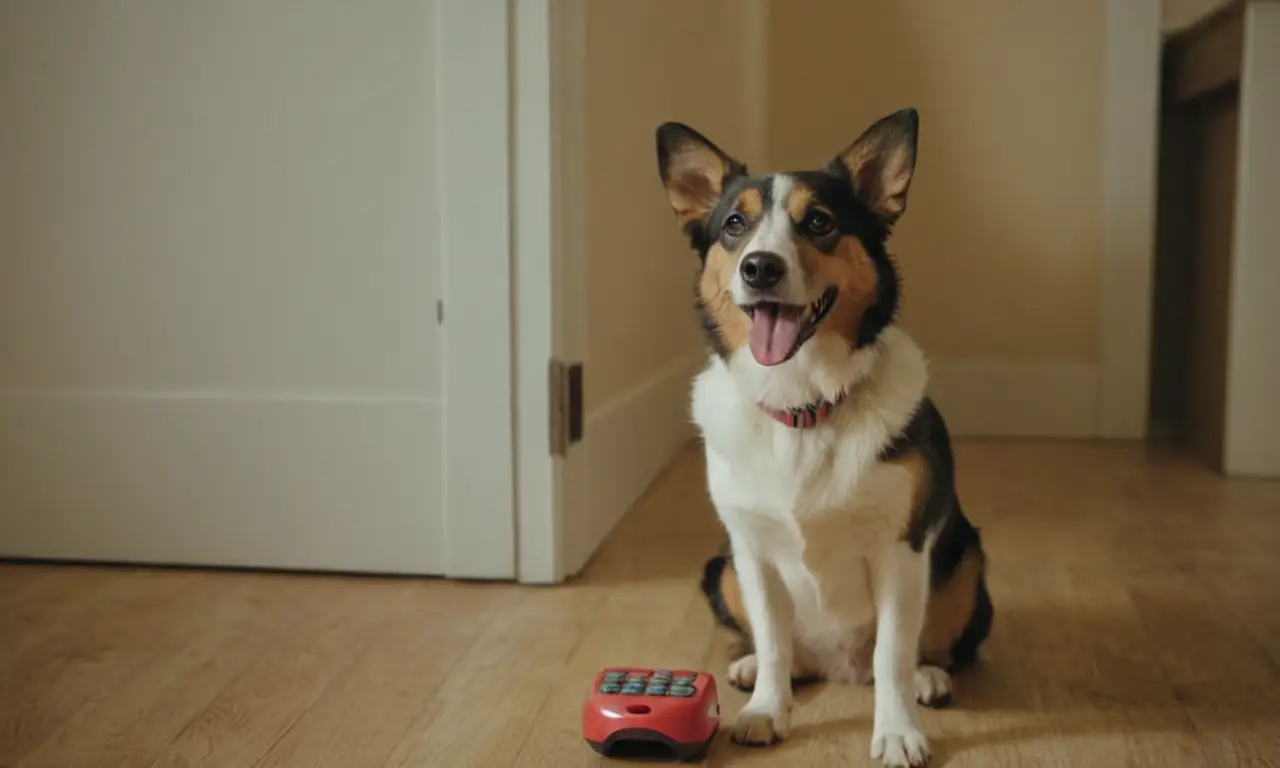
Clicker Training for Dogs: A Comprehensive Guide to This Effective Method
In the realm of canine behavior modification and training, a powerful and humane tool has emerged as a favorite among trainers and pet owners alike: the clicker. This small, often brightly colored device, when paired with positive reinforcement, can revolutionize the way you communicate with your dog, fostering a deeper bond and accelerating learning. This article delves into Clicker for dogs - Everything you need to know about it, exploring its principles, benefits, how to get started, and advanced techniques to help you and your canine companion achieve training success.
𝙲𝚘𝚗𝚝𝚎𝚗𝚝
- What is a Dog Clicker and How Does it Work?
- The Science Behind Clicker Training
- Benefits of Using a Clicker for Dogs
- Getting Started with Clicker Training: The Foundation
- Advanced Clicker Training Techniques
- Troubleshooting Common Clicker Training Issues
- When to Use a Clicker and When Not To
- The Importance of the Verbal Cue
- In summary: A Rewarding Journey with Your Dog
What is a Dog Clicker and How Does it Work?
At its core, a dog clicker is a simple mechanical device that produces a distinct, consistent "click" sound. It's not a magic wand, but rather a sophisticated communication tool. The clicker's effectiveness lies in its ability to act as a bridge between a dog's behavior and a reward. This bridge is crucial because it precisely marks the exact moment the dog performs the desired action.
Imagine trying to reward your dog for sitting. If you only offer a treat after they've sat, they might not fully understand what they did to earn it. Was it the way they lowered their rear? The subtle shift in weight? The clicker eliminates this ambiguity. When your dog performs the desired behavior, you immediately click the device. This sharp, unmistakable sound tells your dog, "Yes! That's exactly what I wanted!" and is immediately followed by a high-value reward, typically a small, tasty treat.
This process, known as classical conditioning, works by associating the neutral stimulus (the click) with an inherently positive stimulus (the treat). Over time, the click itself becomes a predictor of a reward, and the dog begins to offer the desired behavior to elicit the click and, subsequently, the treat.
The Science Behind Clicker Training
The efficacy of clicker training is rooted in well-established principles of animal behavior. Behavioral scientists have long understood the power of operant conditioning, a learning process where behaviors are strengthened or weakened by the consequences that follow them. In clicker training, we are utilizing positive reinforcement.
Positive reinforcement involves adding something desirable (a treat, praise, a favorite toy) after a behavior to increase the likelihood of that behavior occurring again. The clicker's role is to deliver this reinforcement at the precise moment the behavior occurs, making the connection clear and immediate for the dog. Without the clicker, timing can be incredibly difficult, especially for complex behaviors. A slight delay in delivering the reward can lead to the dog performing a different, unintended behavior and associating the reward with that instead.
The clicker also offers a unique advantage due to its distinctiveness. Unlike verbal cues, which can be varied in tone and volume, or hand signals, which can be misinterpreted, the clicker's sound is consistent and unambiguous. This clarity is essential for effective communication with a dog.
Benefits of Using a Clicker for Dogs
The advantages of incorporating a clicker into your dog's training regimen are numerous and far-reaching:
Border Collie & Dog Harmony: A Guide to Peaceful Coexistence- Precise Timing: The clicker allows for pinpoint accuracy in marking desired behaviors, ensuring your dog understands exactly what they are being rewarded for. This is especially beneficial for teaching complex sequences or subtle actions.
- Clear Communication: The distinct sound of the clicker cuts through distractions and provides a clear, consistent signal to your dog, reducing confusion and misinterpretation.
- Accelerated Learning: By providing immediate and unambiguous feedback, clicker training can significantly speed up the learning process for new commands and behaviors.
- Positive and Humane Approach: Clicker training relies solely on positive reinforcement, making it a gentle and ethical method that builds trust and strengthens the bond between you and your dog. It avoids the need for punishment or correction.
- Versatility: The clicker can be used to teach a wide array of behaviors, from basic obedience commands like "sit" and "stay" to more advanced tricks, agility maneuvers, and even addressing behavioral issues.
- Building Confidence: As dogs consistently experience success and earn rewards through clicker training, their confidence and self-esteem grow, making them more eager to learn and participate.
- Reduced Frustration for Both: The clarity of the clicker can significantly reduce frustration for both the dog and the owner, leading to a more enjoyable training experience for everyone.
- Bridging the Gap: The clicker effectively bridges the gap between the behavior and the reward, especially when the reward cannot be delivered instantaneously.
Getting Started with Clicker Training: The Foundation
Before you even pick up a clicker, there are a few essential preparatory steps:
- Choose the Right Clicker: Most standard plastic box clickers are perfectly suitable. Some people prefer clickers with a softer sound, while others like a sharper click. Experiment if possible, but don't overthink this step.
- Gather High-Value Rewards: This is paramount. Your dog needs to be highly motivated by the treats you offer. Think small, soft, and incredibly tasty morsels that your dog absolutely loves. Examples include tiny pieces of cooked chicken, cheese, hot dogs, or commercially available training treats. The treat should be small enough to be consumed quickly, so training isn't interrupted by prolonged chewing.
- Find a Quiet Training Environment: Initially, choose a location with minimal distractions. This could be a quiet room in your house or a fenced backyard without other pets or people present. As your dog progresses, you can gradually introduce more distracting environments.
Charging the Clicker: The First Step
The most crucial initial step is to "charge" the clicker. This is the process of teaching your dog that the click sound predicts a reward. It's simple and effective:
- Step 1: In your quiet training environment, hold the clicker in one hand and a treat in the other.
- Step 2: Say nothing to your dog.
- Step 3: Click the clicker.
- Step 4: Immediately give your dog a treat.
- Step 5: Repeat this process 10-20 times.
Do this a few times a day for a couple of days. Your dog will quickly learn that the click means a treat is coming. You'll know you've successfully charged the clicker when your dog's ears perk up or they look at you expectantly the moment they hear the click, even before you present the treat.
Introducing Your First Command: "Sit"
Once the clicker is charged, you can start teaching basic commands. "Sit" is an excellent starting point because most dogs naturally sit.
- Luring: Hold a treat near your dog's nose. Move the treat upwards and slightly back over their head. As their head follows the treat, their rear end will naturally lower into a sit.
- Click and Treat: The instant your dog's rear touches the ground, click the clicker. Immediately give them the treat and praise them.
- Repeat: Repeat this process several times. Don't worry if your dog doesn't sit perfectly every time; focus on the moment their rear touches the floor.
- Fade the Lure: As your dog starts to anticipate the sit, you can gradually make the hand motion smaller and less reliant on the treat itself. Eventually, you'll be able to give the verbal cue "sit" followed by the smaller hand signal, and then eventually just the verbal cue.
- Introduce the Verbal Cue: Once your dog is reliably sitting with the hand lure, start saying "sit" just as you begin the lure. Your dog will associate the word with the action.
- Remove the Lure: Gradually phase out the hand lure, relying solely on the verbal cue. When your dog sits on command, click and treat.
Important Note: During the charging phase and initial command teaching, only click when the desired behavior occurs. Do not click if your dog does something else, barks, or is just looking at you. The click is a precise marker of success.
Advanced Clicker Training Techniques
As your dog becomes proficient with basic commands, you can explore more advanced techniques:
Shaping Behaviors
Shaping is a powerful clicker training technique that involves rewarding successive approximations of a desired behavior. This is how you teach behaviors that dogs don't naturally perform. For example, teaching a dog to "ring a bell" to go outside:
- Reward Interest: Start by clicking and treating any attention your dog gives to the bell (looking at it, sniffing it).
- Reward Interaction: Gradually raise the criteria. Click and treat only when they touch the bell with their nose.
- Reward Movement: Then, click and treat when they push the bell with enough force to make it move.
- Reward Sound: Finally, click and treat only when they push the bell with enough force to make it ring.
Shaping requires patience and keen observation to understand the dog's progress.
Cognitive Emotional Dog Training: Deeper Bonds & Smarter PupsTarget Training
Target training involves teaching your dog to touch a specific object (a target stick, your hand, a mat) with their nose or paw. This is incredibly useful for directing your dog's movement and teaching them to go to specific places.
- Charge the Target: Present the target. When your dog shows interest or touches it, click and treat.
- Develop the Behavior: Gradually only reward deliberate touches.
- Add Distance: Once your dog reliably touches the target, start moving it away from you. Click and treat when they follow and touch it.
Capturing Behaviors
Capturing involves observing your dog and "capturing" a desired behavior when they offer it spontaneously. For example, if your dog yawns or stretches, and you want to teach them a cue for that, you would click and treat them the moment they yawn or stretch. Later, you can introduce a verbal cue.
Trick Training with a Clicker
Almost any trick can be taught using clicker training. Complex tricks can be broken down into smaller steps, and each step is rewarded with a click and treat. This makes learning fun and manageable for the dog.
Troubleshooting Common Clicker Training Issues
Even with the best intentions, you might encounter some hiccups. Here are common issues and solutions:
- Dog is distracted: Your reward might not be high-value enough, or the training environment is too stimulating. Go back to a quieter location with even better treats.
- Dog doesn't seem interested: Ensure your treats are truly motivating. Also, consider if your dog is tired, stressed, or unwell.
- Dog is "overwhelmed" or "stuck": You might be increasing the criteria too quickly. Break down the behavior into even smaller steps.
- Clicker sound is startling: Some dogs can be sensitive to loud noises. Try a clicker with a softer sound, or muffle the sound slightly with your hand.
- Accidental clicking: Be mindful of when you click. Only click when the exact desired behavior occurs. If you click accidentally, don't reward.
When to Use a Clicker and When Not To
The beauty of Clicker for dogs - Everything you need to know about it is its versatility. It can be used for:
- Basic obedience (sit, stay, come, down)
- Leash manners
- House training
- Trick training
- Agility and other dog sports
- Addressing mild behavioral issues like jumping or barking excessively (by reinforcing alternative behaviors)
However, there are situations where the clicker might not be the primary tool, or should be used with extreme caution:
- Aggression or severe fear: For serious behavioral problems involving aggression or intense fear, consult a certified professional dog trainer or veterinary behaviorist. They may use clicker training as part of a broader behavior modification plan.
- Situations requiring immediate intervention: In rare instances where a dog's safety is at immediate risk, a sharp verbal "no" or leash correction might be necessary to interrupt dangerous behavior. However, the goal should always be to transition to positive reinforcement methods.
The Importance of the Verbal Cue
Once your dog understands a behavior through clicker training, you'll want to add a verbal cue. Say the cue ("sit," "stay," etc.) just before your dog performs the behavior. After a successful repetition and reward, start phasing out the hand lure (if used) and the clicker. Eventually, the dog will respond to the verbal cue alone. However, many people continue to use the clicker for refining behaviors or teaching new ones.
In summary: A Rewarding Journey with Your Dog
Clicker for dogs - Everything you need to know about it offers a rewarding and effective pathway to building a strong, communicative relationship with your canine companion. By understanding the principles of positive reinforcement and the power of precise timing, you can unlock your dog's potential and enjoy the journey of training together. Remember, consistency, patience, and high-value rewards are your best allies. Happy clicking!
Common Cattle Diseases: Prevention & Management Guide
Cat Leash Training: Your Step-by-Step Guide

Mastering Dog Training: Defense & Attack Techniques

Dog Behavior Expert: When Your Pet Needs Guidance

Stop Garden Holes: Effective Ways to Prevent Dog Digging

Overcoming Canine Insecurity & Fear: A Comprehensive Guide

Stop Male Dog Fights: Expert Tips for Harmony
Related posts